
How Traffic Warrants Work in Keith County
Nebraska hears its traffic matters in County Court. Your citation lists the court date and often says whether you may waive it and pay instead of appearing. Miss the date or skip a required step, and court process can follow. A traffic warrant stays a court question even when a DMV notice or license hold shows up too, so keep those tracks separate. For the rules that govern this, read the Nebraska traffic guidance, then call Keith County Court about your own case. Municipal traffic and ordinance matters run through the same county-court structure. One caution: a driving record, an insurance question, or a DMV screen will not settle whether an active warrant exists.
- Read the citation’s court, date, waiver, and payment instructions.
- Search the case in Nebraska JUSTICE by name, county, year, and court.
- Ask County Court whether process was issued and what recall route applies.
- Make only the official payment or appearance step confirmed by the court.
- Keep the receipt and request court confirmation of recall and DMV compliance separately.
Keith County Traffic Warrant Checks
Keith County publishes no public traffic-warrant portal. The working chain runs from the JUSTICE case search to the County Court clerk, and to a focused records request if the public register or payment record does not answer the warrant question. The sheriff's page may offer after-hours routing, but it cannot replace the court's own status entry on an outstanding warrant.
| Channel | Use it for | Limit |
|---|---|---|
| JUSTICE | Find the traffic case and register. | Not a dedicated live warrant field. |
| County Court | Issuance, recall, hearing, payment, and citation questions. | Call to confirm hours and case-specific steps. |
| Official e-payment | Payment where the citation allows it. | Payment alone may not recall a warrant. |
| Sheriff or jail | Confirmed after-hours, execution, or custody routing. | Does not replace the judge’s order. |
For a wider sweep, run the Keith County warrant check first, then come back to the traffic court route.
Traffic Warrants: What They Show
The official waiver and plea materials spell out the fields a reader may need: citation or case information, court, date and time, offense, total fine and costs, liquidated damages, signature, and the promise to appear. Lose the citation? Take that to Keith County Court or the official state form, never to an unofficial form generator.
| Citation number | The best anchor when a name search returns several cases. |
|---|---|
| Court date and time | Shows the appearance obligation and whether a missed date may matter. |
| Offense | Identifies the traffic or ordinance entry in the court file. |
| Payment and costs | Shows the financial step, not automatic warrant recall. |
| Compliance date | May be needed for court and DMV follow-up after posting. |
| Warrant or recall entry | Must come from the court register or order. |
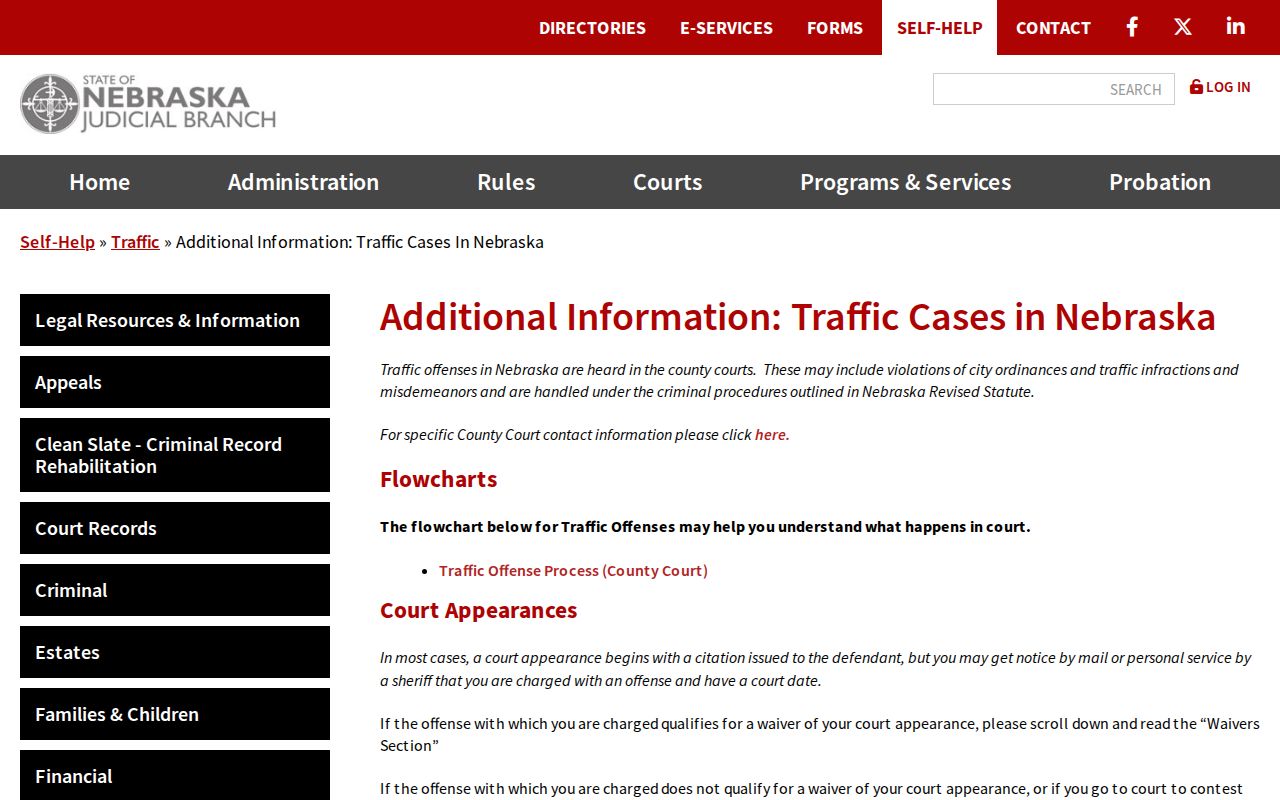
The official traffic page keeps citation payment and warrant recall as separate steps.
Paying Does Not Recall a Keith County Traffic Warrant
Nebraska's official traffic guidance carries one central warning. If a warrant has issued, paying the ticket does not by itself recall it. The court must do that. What Keith County requires locally may be cash payment, an appearance, a waiver, or another approved step. Confirm the route with Keith County Court before you travel or pay.
Keep both records: Save the payment receipt, then ask when the court register will show compliance and whether a separate recall order is required.
A payment portal can take your money while the court still needs a judge's action. The same line separates court costs, bond, a DMV notice, and a warrant. Ask the clerk what document proves each step.
How Traffic Warrants Trigger License Holds
A traffic warrant and a license suspension sometimes travel together, but they are not the same record. Nebraska Revised Statutes §§60-4,100 and 60-692 lay out how the court notifies the DMV of a failure to comply or an unpaid traffic judgment. The DMV keeps driving-privilege status. The court keeps the warrant and the recall order.
| Question | Court record | DMV record |
|---|---|---|
| What it tracks | Citation, hearing, warrant, payment, recall. | Notice, suspension, compliance, reinstatement. |
| Who confirms it | Keith County Court clerk or register. | Nebraska DMV and compliance notice. |
| What a receipt proves | Payment was submitted or posted as stated. | Posting may still take time before DMV action. |
A license hold does not prove an active Keith County warrant. A court recall does not finish every DMV step either.
Keith County Citation and DMV Timing
The DMV cautions that an online payment can take 24 or more hours to post, after which the court sends its compliance information forward. Hold onto your case or citation number, and request a Notice of Compliance when you need proof. Court posting, warrant recall, and DMV reinstatement are three separate checkpoints, not one. For the administrative side, use the Nebraska DMV failure-to-comply information and the reinstatement guidance. A DMV screen cannot answer a court-warrant question. For the register and local payment instructions, call County Court directly.
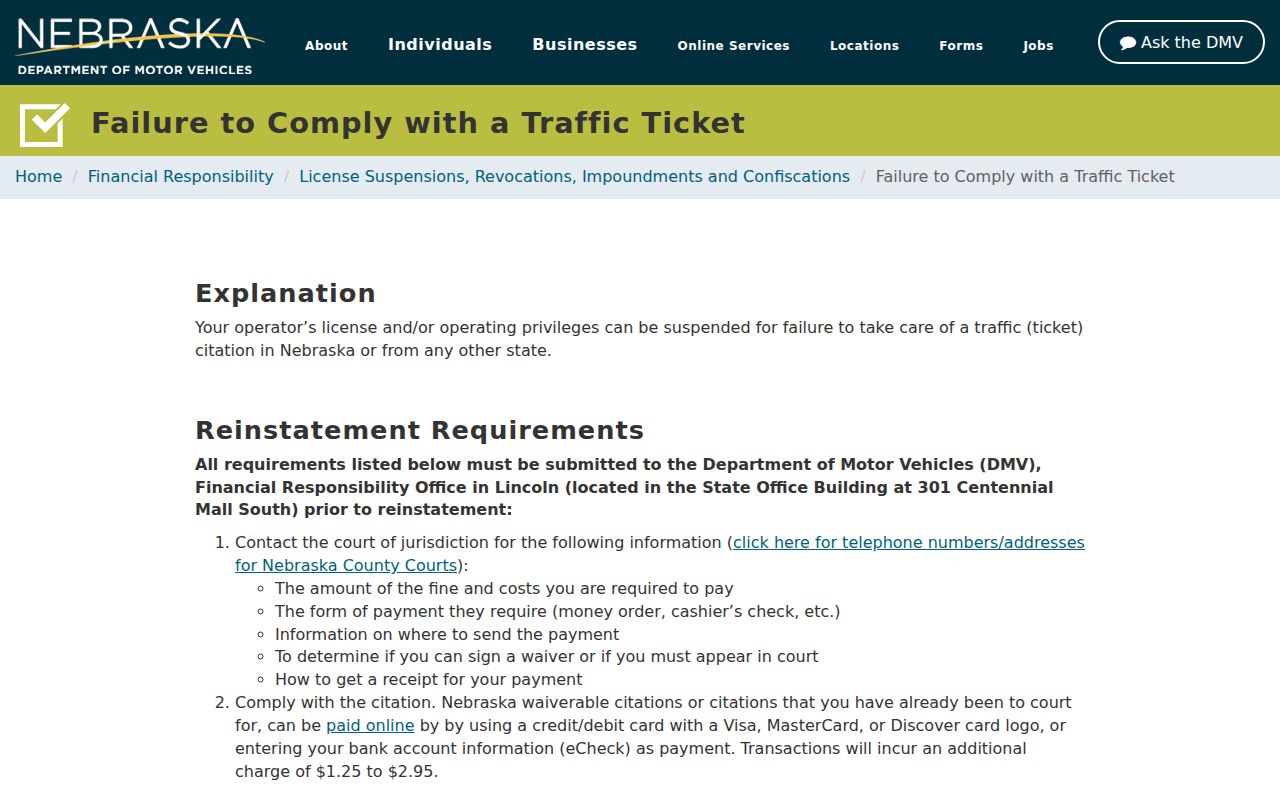
That posting delay is exactly why the court and the DMV should be checked as two separate systems in Keith County.
Lost Citations and Keith County Court
If the paper is gone, contact Keith County Court at 308-284-3693, or use the official Nebraska traffic page's form and payment route where it is allowed. Have your full name, the likely date, and any citation clue ready. Ask whether the case is waivable, whether an appearance is required, and whether process has issued. Never use a form sent by a caller, a text, or a commercial site. Keith County's March 2026 scam warning and the Nebraska court warning both say to dial official numbers yourself. Keep a copy of every form, payment confirmation, and court response.
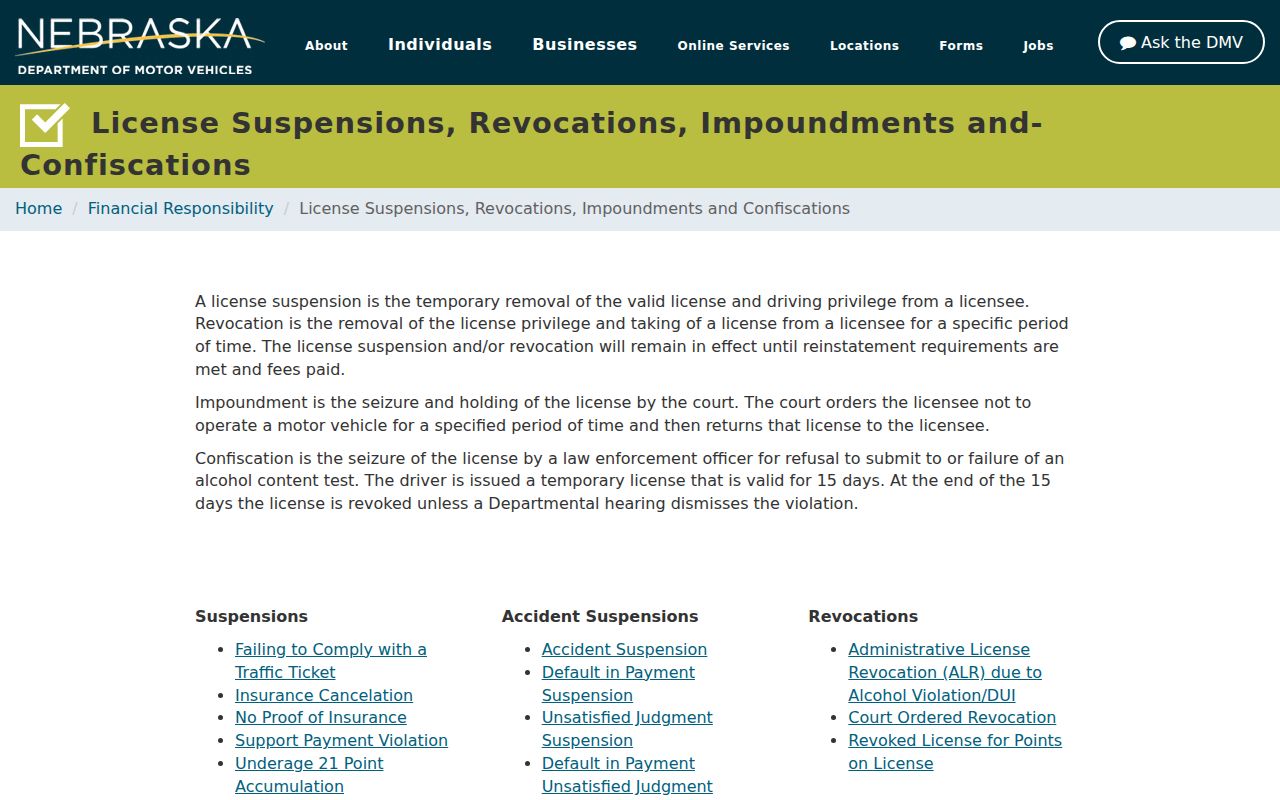
DMV reinstatement information helps with the license issue, not the court’s warrant status.
Clearing a Keith County Traffic Warrant
Ask the court what the next step is: payment, a waiver, an appearance, a motion, or another judge-approved process. If fines and costs are at issue, ask whether a hearing or an ability-to-pay process under §29-2412 applies. Not every missed citation ends the same way, so do not assume yours will. Once the approved step is done, request the register entry, recall order, or compliance notice that proves the change. If custody or service enters the picture, use the sheriff or jail for that part alone. An attorney can help with the legal choice when an arrest warrant or a court appearance is involved.
Traffic Warrant Scam Checks in Keith County
Courts do not serve arrest warrants by phone, text, or email while demanding immediate payment. Keith County has also warned about fake bond calls seeking card payment. Hang up, find the official County Court number, and ask which case and procedure control. No gift cards, crypto, wire transfers, or personal accounts.
Safe route: Independently dial the court or sheriff, state the citation or case number, and ask whether payment changes the warrant or only the financial entry.
That simple check shields you from a false payment demand. It also keeps the Keith County court record and the DMV process distinct.
Traffic Warrant Versus Court and DMV Holds
Start with the Keith County Court contact for any traffic case. The sheriff can confirm what happens after hours. The DMV only tracks your driving privileges. A records request works for fields like a case number or date range. It will not make the clerk read your options aloud. Write down the office, the case number, the date, the payment method, and any document title. One caution: a blank search screen, an old citation, or a paid receipt proves nothing about the warrant itself. Only the Keith County court of record can confirm it.
Keith County Traffic Warrant Record Access
Traffic files in Keith County sit under the Nebraska Public Records Act and the court's access rules. Sealed and juvenile material may be withheld. Ask to inspect the public register first, naming a case and date range.
Record boundary: Court warrant status, DMV license status, and payment status belong to different offices. Ask each office for the record it actually controls.
Do not publish personal identifiers or treat a traffic record as a driving-history product.